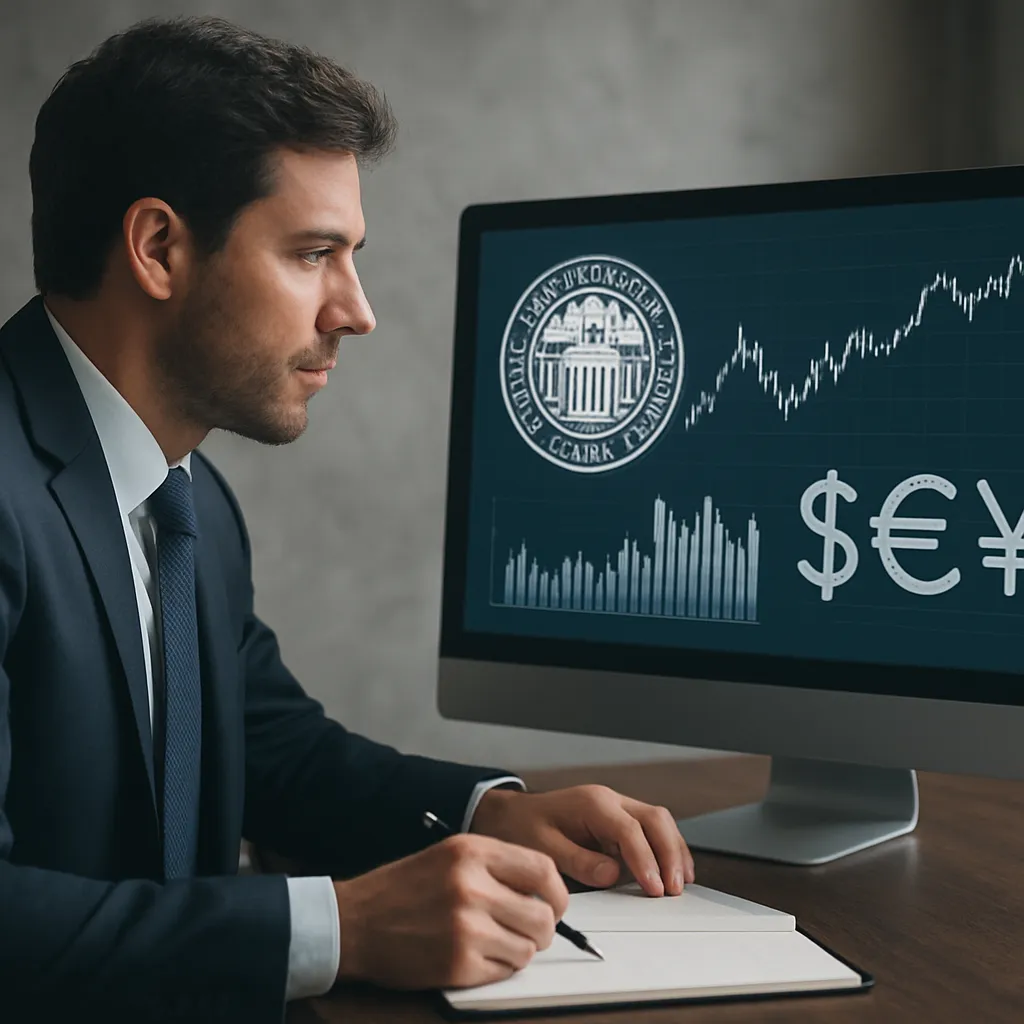
Currency futures contracts offer a structured market for investors to gain exposure to foreign exchange rates. By standardizing contract sizes, expiration dates, and settlement terms, these instruments enable both hedgers and speculators to manage currency risk or pursue profit opportunities. This article explores the mechanics of currency futures, the key drivers behind their price movements, and effective trading approaches.
Understanding the Mechanics of Currency Futures
The primary distinction that sets currency futures apart from other FX derivatives is their exchange-traded nature. Unlike over-the-counter forward contracts, futures are standardized agreements to buy or sell a specific currency at a predetermined rate on a future date. Each contract specifies:
- Contract Size: The amount of the base currency to be exchanged, such as 100,000 euros per contract.
- Expiration Date: A fixed date when the contract must be settled, typically quarterly for major currency pairs.
- Pricing Unit: The quoted value in terms of the counter currency (for example, USD per EUR).
- Minimum Price Fluctuation: Also called tick size, it defines the smallest increment by which the price can move.
Participants must post an initial margin—a performance bond—to open a position. Daily gains or losses are marked to market, which ensures that counterparties maintain sufficient funds in their accounts. This mechanism reduces counterparty credit risk but introduces a need for active risk monitoring, as margin calls can be triggered by adverse price movements.
Key Players in the Futures Market
- Commercial Hedgers: Corporations or financial institutions that use currency futures to lock in exchange rates and protect profit margins on cross-border transactions.
- Speculators: Traders who seek to profit from currency movements, using leverage to amplify returns (and risks).
- Arbitrageurs: Participants who exploit price discrepancies between futures, spot, and forward markets to secure risk-free profits.
- Institutional Investors: Entities such as hedge funds and pension funds that utilize currency futures for portfolio diversification or yield enhancement.
Drivers Behind Currency Futures Prices
Currency futures prices reflect market expectations about future exchange rates, which are influenced by a combination of macroeconomic, geopolitical, and technical factors. Understanding these drivers can help traders make informed decisions.
Macroeconomic Indicators
- Interest Rate Differentials: Central bank policies shape yield curves and attract or deter foreign capital flows. A higher interest rate in the United States relative to Europe, for example, tends to support a stronger USD against the EUR.
- GDP Growth and Inflation: Robust economic growth often leads to currency appreciation, while high inflation can erode purchasing power and weigh on a currency’s value.
- Trade Balances: Persistent trade surpluses can strengthen a nation’s currency, while deficits can exert downward pressure.
Geopolitical and Event Risks
Political developments, elections, and major policy announcements can trigger sharp currency moves due to shifts in investor sentiment. Natural disasters or unexpected geopolitical conflicts also introduce volatility and can lead to rapid futures price swings. Being aware of scheduled events—such as central bank meetings or GDP releases—and having an event-driven strategy can improve risk-adjusted performance.
Market Sentiment and Technical Analysis
- Liquidity Conditions: High liquidity typically results in tighter bid-ask spreads and more efficient price discovery. Conversely, thin markets may exhibit erratic moves and wider spreads.
- Chart Patterns and Indicators: Traders often rely on moving averages, Relative Strength Index (RSI), and Fibonacci retracement levels to pinpoint entry and exit zones.
- Order Flow and Positioning: Commitments of Traders (COT) reports reveal large speculator or commercial hedger positions, offering clues about potential reversals or trend continuations.
Strategies for Trading Currency Futures
Success in currency futures trading often hinges on choosing an approach that aligns with your risk tolerance, capital base, and market outlook. Below are several strategies commonly employed by market participants.
Trend-Following and Momentum
Trend-following strategies seek to capitalize on sustained currency movements. Traders identify established trends via moving average crossovers or breakouts and ride the momentum until signals indicate a reversal. Key considerations include:
- Position Sizing: Use a fixed fraction of capital per trade to manage drawdowns.
- Stop-Loss Orders: Place protective stops below recent swing lows (for long positions) or above swing highs (for short positions).
- Trailing Stops: Lock in profits by adjusting stops as the trend progresses.
Carry Trade Using Futures
The carry trade exploits interest rate differentials by buying higher-yielding currencies and financing them with lower-yielding ones. In the futures market, you can replicate this strategy without direct borrowing by:
- Buying futures contracts on the high-yield currency.
- Selling futures on the low-yield currency.
Profits stem from the roll-down of futures prices and interest rate convergence. However, sudden currency devaluations can inflict significant losses, underscoring the need for rigorous risk management.
Hedging Corporate FX Exposure
Businesses with foreign revenue streams or expenses can use currency futures to mitigate exchange rate risk. Key steps include:
- Assessing Net Exposure: Calculate the net amount of foreign currency receivables or payables.
- Choosing Appropriate Contracts: Align contract expiration with anticipated cash flows.
- Monitoring Hedge Effectiveness: Compare realized transaction rates with hedge prices and adjust positions dynamically.
Mean Reversion and Range Trading
In sideways markets, traders may adopt mean-reversion tactics, betting that prices will revert to an average level. This involves:
- Identifying Support and Resistance Zones using price history.
- Deploying oscillators such as Stochastic or RSI to gauge overbought or oversold conditions.
- Entering positions near extremities and exiting near the mean or opposite boundary.
Advanced Considerations and Best Practices
While simple models can guide initial trades, seasoned futures traders incorporate advanced tools and strict discipline to navigate complex markets.
- Correlation Analysis: Examine interdependencies between currency pairs to diversify or hedge exposures. For example, EUR/USD and USD/CHF often exhibit inverse correlation.
- Volatility Forecasting: Utilize implied and historical volatility metrics to calibrate position sizes and determine optimal entry timing.
- Algorithmic Execution: Employ automated strategies to minimize slippage and adhere to predefined risk limits.
- Continuous Education: Markets evolve, so ongoing study of new products—like micro currency futures—and emerging technologies—such as blockchain-based FX platforms—can provide an edge.
Risk Management Framework
Implementing a robust risk framework is vital. Key elements include:
- Maximum Drawdown Limits: Define the hardest drawdown threshold that triggers strategy reassessment.
- Daily Loss Caps: Institute per-day loss boundaries to prevent emotional decisions and catastrophic losses.
- Portfolio Stress Testing: Simulate extreme market scenarios to evaluate potential P&L swings.
- Regular Review and Adaptation: Periodically audit results, refine models, and stay alert to changing market dynamics.
By mastering the fundamentals of contract specifications, understanding the macro and technical drivers, and refining a coherent trading strategy, investors can harness the powerful tools embedded in currency futures. Whether your goal is portfolio diversification, corporate hedging, or speculative profit, disciplined application of these principles will help navigate the dynamic world of FX futures.