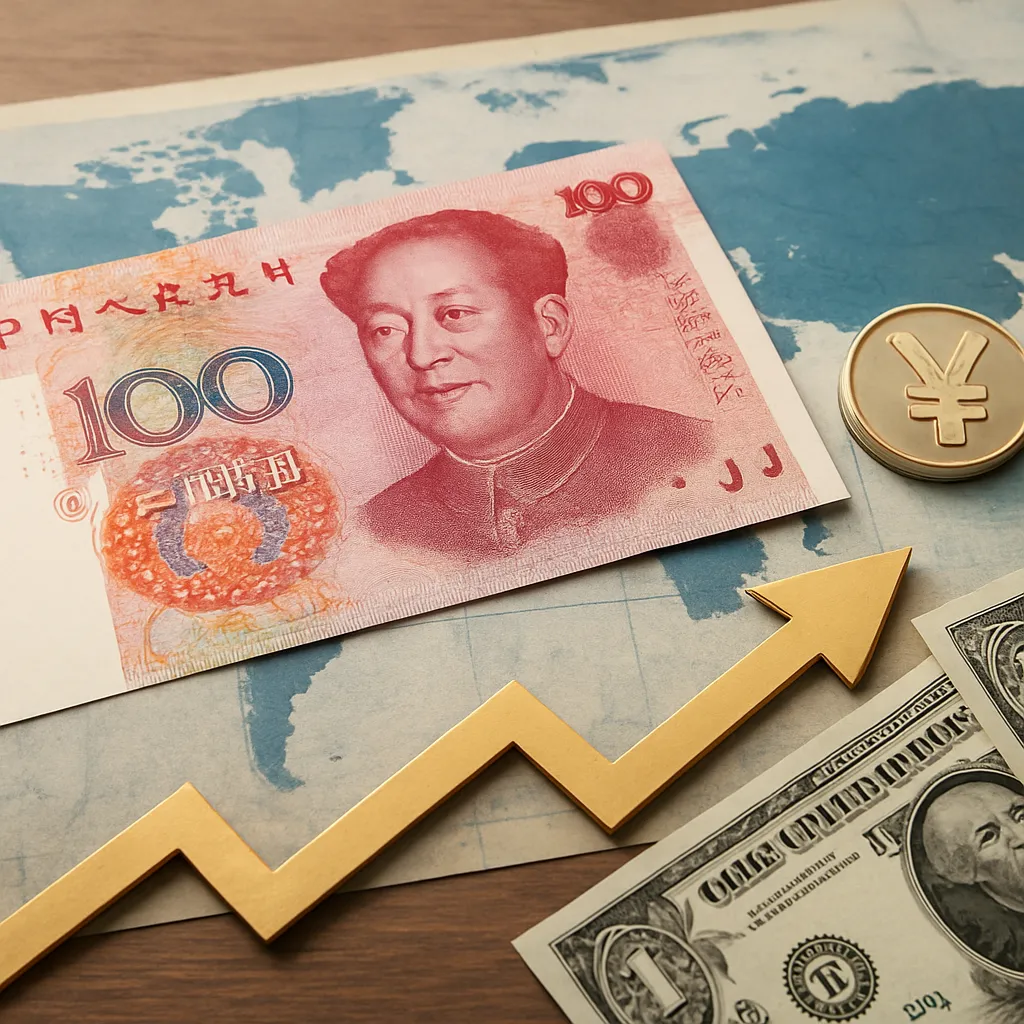
Global finance continues to witness shifting paradigms as the Chinese Yuan assumes an increasingly prominent role in shaping foreign exchange dynamics. Investors and policymakers are closely monitoring its trajectory, recognizing that movements in the Yuan can trigger ripple effects across sovereign debt markets, commodity prices, and capital flows. Understanding this currency’s evolving influence is critical for crafting robust currency investment strategies.
Historical Background and Exchange Rate Evolution
The journey of the Chinese Yuan from a strictly managed peg to a more flexible exchange system reflects China’s broader economic liberalization efforts. Prior to 2005, the Yuan maintained a rigid link to the US Dollar, constraining its price discovery mechanisms. Following the 2005 devaluation, policymakers initiated controlled revaluations, allowing the Yuan to appreciate gradually. This shift highlighted the interplay between domestic monetary policy objectives and external pressure for convertibility.
Key milestones include:
- 2005 reform: Introduction of a narrow trading band against the Dollar
- 2008 financial crisis: Temporary re-pegging to stabilize export revenue
- 2015 adjustment: Market-based “fix” that surprised global markets with renewed depreciation
- 2019–2021: Gradual liberalization steps amid capital outflow risks
These policy tweaks underscored China’s ambition to balance financial autonomy with the goal of integrating the Yuan into the global reserve currency pool. As a result, investors have gained exposure to a currency that is neither fully fixed nor entirely free-floating, presenting both opportunities and challenges in risk management.
Impact on Global Currency Markets and Trade
Movements in the Yuan can reshape forex volatility across both developed and emerging markets. Major trading partners often find their own currencies under pressure following sharp shifts in the Yuan’s exchange rate. For example, a weakening Yuan tends to make Chinese exports more competitive, simultaneously triggering depreciation in export-driven economies seeking to maintain price parity.
Three primary channels through which the Yuan influences global markets:
- Competitive Devaluation: A devalued Yuan can force other exporters to adjust rates, fueling currency wars.
- Commodity Price Transmission: Since many raw materials are priced in Dollars, Yuan fluctuations indirectly affect Asian commodity importers, altering trade balances.
- Cross-Border Capital Flows: Anticipation of revaluation can spur speculative inflows, while depreciation fears drive outflows into safe-haven assets.
Furthermore, the Yuan’s steady ascent as an invoicing currency in global trade contracts has put pressure on traditional invoicing currencies such as the US Dollar and Euro. This trend not only diversifies settlement options but also reshapes hedging strategies among multinational corporations.
Capital Controls and the Road to Internationalization
China has historically imposed capital controls to shield its domestic financial system from volatile hot money flows. These measures include stringent quotas on foreign exchange conversions, limits on outbound direct investment, and strict scrutiny of cross-border bond issuances. While effective in curbing sudden reversals, these controls constrain the Yuan’s appeal as a truly international currency.
In recent years, the People’s Bank of China has taken incremental steps to ease restrictions. Initiatives such as the Bond Connect program and expanded quotas for Qualified Foreign Institutional Investors (QFII) signal a cautious move toward liberalization. These reforms aim to:
- Enhance market liquidity in onshore Yuan-denominated assets
- Attract strategic foreign capital into bond and equity markets
- Smooth the path for the Yuan’s inclusion in key reserve currency frameworks
Despite progress, full convertibility remains distant. Authorities must strike a delicate balance between fostering economic growth and maintaining enough policy flexibility to respond to external shocks.
Investment Strategies Involving the Yuan
Currency investors are devising tailored approaches to harness the Yuan’s rising significance. Below are notable strategies:
- Direct Forex Positions: Traders take long or short positions in USD/CNY or CNH (offshore Yuan) pairs to capitalize on anticipated policy shifts or macroeconomic differentials.
- Emerging Market Diversification: Allocating a portion of currency exposure to Yuan-pegged or Yuan-linked economies can act as a hedge against Dollar strength.
- Yield Arbitrage: Sino-centric bond ETFs and dim sum bonds (Yuan-denominated debt issued offshore) offer higher yields but come with credit and liquidity risks.
- Currency Options: Utilizing vanilla or barrier options to protect against sudden devaluation, while limiting premium costs.
- Cross-Asset Correlation Plays: Engaging in multi-asset trades, such as buying Yuan and commodity-linked equities, to exploit positive correlations when China ramps up stimulus.
Successful execution requires robust modeling of policy behavior, systematic stress testing for tail events, and active monitoring of global capital flows. Institutional players often complement quantitative factors with on-the-ground intelligence to anticipate regulatory tweaks.
Future Outlook and Emerging Considerations
As China pushes for greater financial integration, observers should watch for several pivotal developments:
- Further easing or tightening of capital controls in response to geopolitical tensions
- Potential inclusion of the Yuan in new reserve currency alliances, altering global balance sheets
- Increasing use of digital Yuan (e-CNY) in cross-border settlements, potentially lowering transaction costs and accelerating adoption
- Macroprudential policy shifts aimed at containing debt risks, which could provoke sharp currency adjustments
Ultimately, the Chinese Yuan’s trajectory will be shaped by its ability to reconcile domestic stability with ambitions of global prominence. For investors, remaining attuned to structural reforms and policy signals is essential for navigating this dynamic currency landscape.