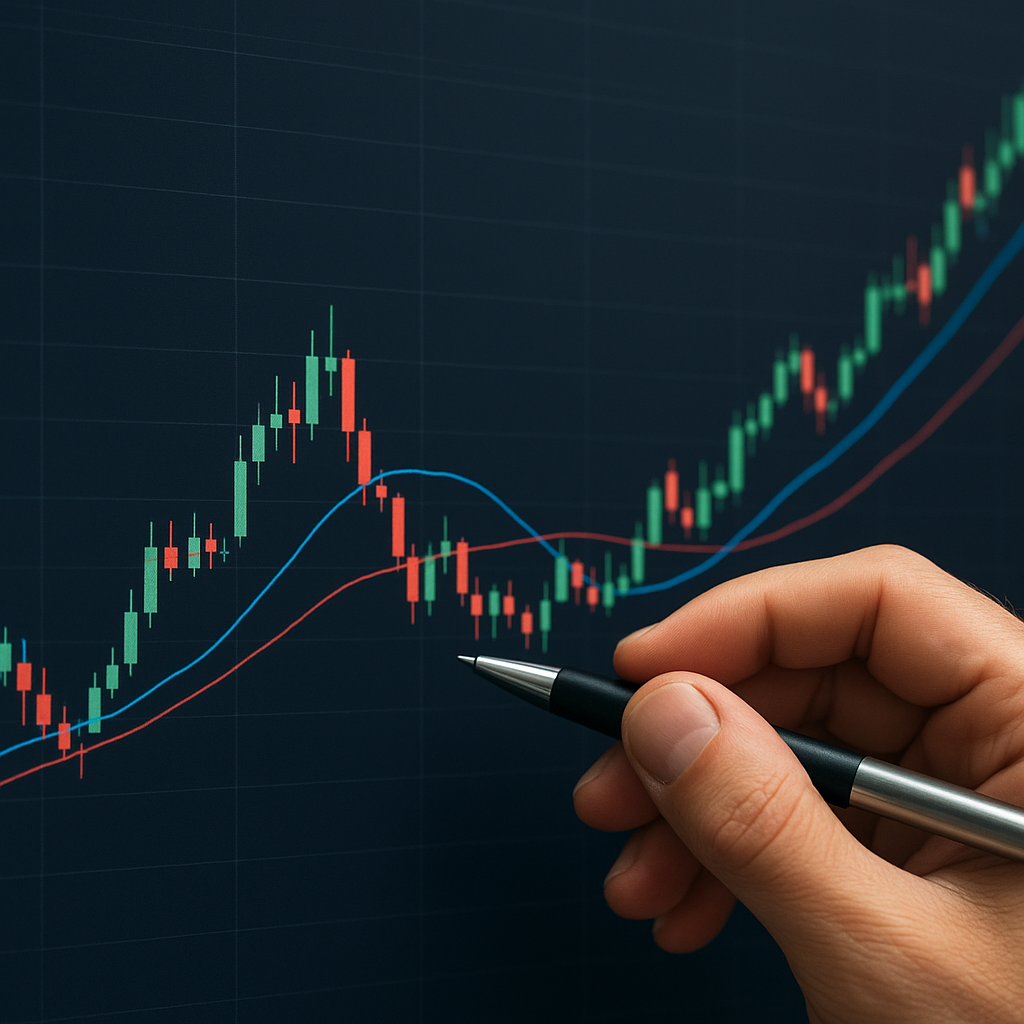
Mastering the art of forex trading hinges on reading the market’s ebb and flow without relying on lagging indicators. This guide unravels how to harness pure price action to identify high-probability setups, manage risk, and refine your approach across all currency pairs.
Fundamentals of Price Action
Price action is the study of historical price movements to forecast future market behavior. Instead of overlaying complex technical indicators, traders focus on raw data displayed through candlestick charts and chart patterns. This method relies on three core elements:
- Support and resistance levels—zones where price repeatedly bounces or stalls.
- Trend identification—determining whether the market is in an uptrend, downtrend, or trading sideways.
- Market context—understanding the broader frame, such as daily or weekly swings.
By interpreting how buyers and sellers interact at key levels, you gain a direct window into market sentiment and volatility.
Analyzing Candlestick Patterns
Single and multiple-bar patterns formed by candlesticks reveal shifts in momentum. Recognizing these shapes allows you to anticipate reversal points and potential breakouts.
Single-Bar Formations
- Pin Bars: A long wick shows aggressive rejection of higher or lower prices.
- Inside Bars: A small candle fully contained within the previous bar indicates indecision.
Multi-Bar Patterns
- Engulfing Bars: A candle that completely engulfs its predecessor signals strong directional conviction.
- Three-Bar Runs: Successive candles in the same direction confirm persistent momentum.
Applying these patterns near established support or resistance improves accuracy. Always verify with the larger market structure before taking a position.
Trendlines, Channels, and Market Structure
Drawing trendlines connects swing highs in a downtrend or swing lows in an uptrend. Parallel lines form channels, highlighting potential entry and exit points as price oscillates within.
- Uptrend lines: Connect ascending lows and use as dynamic support.
- Downtrend lines: Link descending highs to identify resistance.
- Channels: Determine when price nears a boundary to anticipate reversals or breakouts.
Altering your timeframe offers fresh perspective. A breakout on a 1-hour chart might be a retest on a 15-minute chart—perfect for fine-tuning entries.
Developing a Consistent Routine
A disciplined approach separates successful traders from amateurs. Establishing a clear routine provides structure and emotional control.
Pre-Market Preparation
- Scan major currency pairs for price action setups near significant levels.
- Note key economic events that could trigger volatility.
- Identify support and resistance zones on multiple timeframes.
Trading Session Execution
- Wait patiently for your entry trigger, such as an engulfing candle or trendline rejection.
- Define entry and exit points clearly: set stop-loss beyond structural level and target a realistic reward-to-risk ratio.
- Scale out or trail stops as price moves in your favor to protect profits.
Post-Session Review
- Record each trade with screenshots and notes.
- Analyze mistakes: did you follow your plan or act emotionally?
- Adjust your strategy based on performance metrics and evolving market conditions.
Risk Management and Psychological Resilience
Flawless execution of price action setups won’t matter without robust risk management and a stable mindset. Adopting these practices enhances long-term survival.
- Limit risk per trade to a small percentage of your account—typically 1–2%.
- Use stop-loss orders based on structure, not arbitrary distances.
- Maintain a consistent position size calculation that adapts to each setup’s volatility.
Controlling emotions is paramount. Keep a trading journal to track feelings during wins and losses. Embrace each outcome as feedback to strengthen your discipline.
Combining Price Action with Complementary Tools
While pure price action suffices, blending selective indicators can boost confidence:
- Simple Moving Averages (SMA) to gauge trend direction when price respects key levels.
- Volume profiles to confirm genuine breakouts or detect false moves.
- Pivot points for intra-day support and resistance confluence.
Ensure any added tool aligns with your price action lens, avoiding clutter that obscures clarity.
Advanced Techniques and Continuous Improvement
Experienced traders evolve by refining pattern recognition and market interpretation:
- Assess higher-timeframe trends to bias trades on lower frames.
- Integrate order flow concepts like liquidity hunts around stops.
- Develop scenarios rather than fixed predictions, adapting quickly to unfolding price behavior.
Regularly review your edge: Which setups yield the highest win rates? Where do you struggle? Use this insight to optimize your approach and sustain growth in the dynamic forex arena.