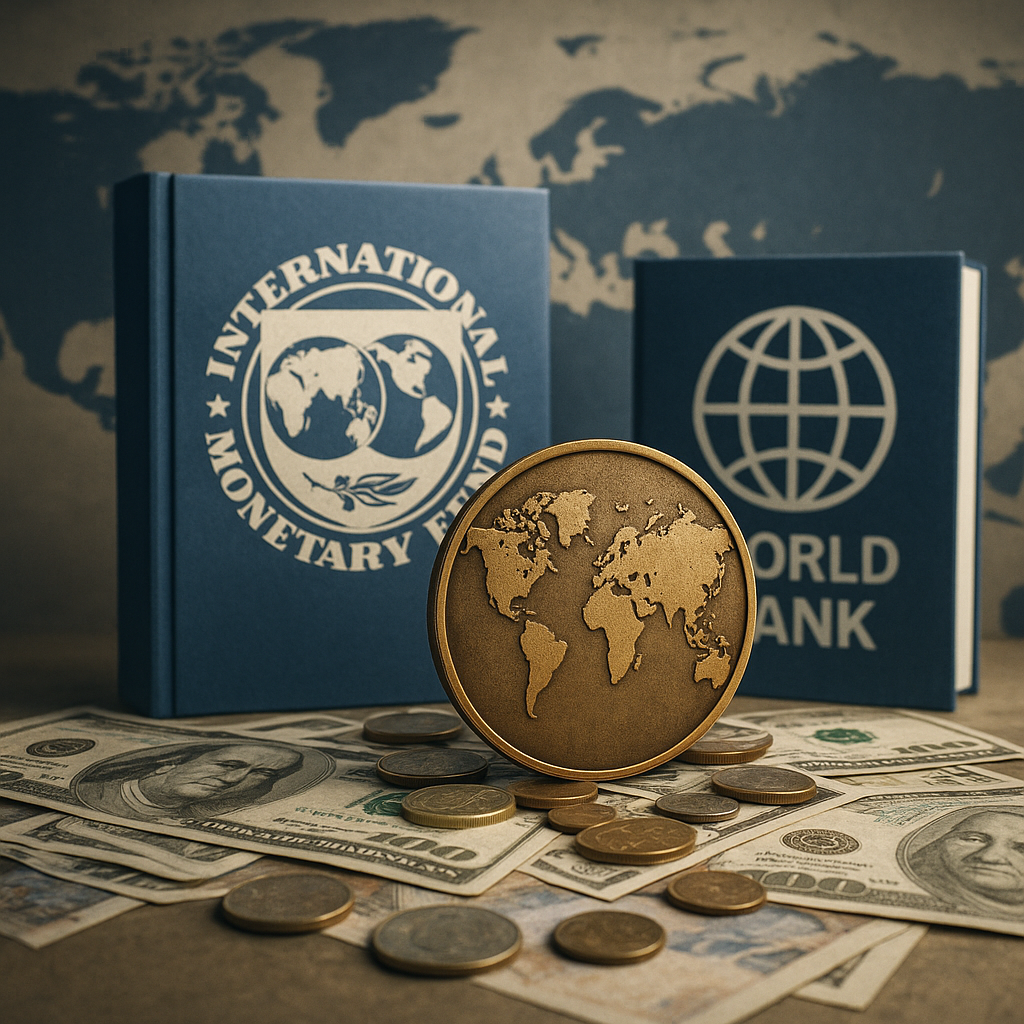
The global financial architecture relies heavily on two pillars whose influence extends across borders and markets: the IMF and the World Bank. As investors seek opportunities in foreign currencies and navigate the complexities of cross-border capital flows, understanding how these institutions contribute to stability becomes paramount. This article explores their historical foundations, core mechanisms for currency support, implications for market participants, and emerging challenges shaping the future of international monetary cooperation.
Historical Foundations of Global Financial Institutions
The aftermath of World War II spurred a concerted effort to rebuild shattered economies and prevent a recurrence of debilitating financial crises. The 1944 Bretton Woods Conference laid the groundwork for two complementary entities:
- International Monetary Fund: Designed to oversee a fixed-exchange-rate system anchored by the U.S. dollar, provide short-term emergency financing, and promote macroeconomic surveillance.
- World Bank: Mandated to deliver long-term loans and technical assistance for reconstruction and development projects, particularly in war-torn and impoverished nations.
Over decades, the rigid Bretton Woods framework gave way to more flexible exchange rates, but the IMF and World Bank adapted their missions. The IMF shifted toward continuous oversight of national policies and emergency lending, while the World Bank broadened its portfolio to include poverty reduction and infrastructure development. This evolution cemented their roles as guardians of liquidity and champions of sustainable growth worldwide.
Mechanisms of Currency Stabilization
Both institutions deploy a spectrum of tools to maintain orderly currency markets and enhance sovereign creditworthiness. Their interventions serve not only governments but also inform the risk assessment of foreign exchange traders, hedge funds, and institutional investors.
IMF Lending Programs
- Stand-By Arrangements (SBA): Short-term liquidity support tied to policy benchmarks that restore confidence in a country’s ability to honor sovereign debt.
- Extended Fund Facility (EFF): Medium-term assistance for economies facing deeper structural imbalances, often accompanied by structural reform conditionalities.
- Flexible Credit Line (FCL): Preemptive lines of credit for countries with strong policy track records, aimed at crisis prevention rather than cure.
World Bank Instruments
- International Development Association (IDA) Credits: Highly concessional financing for low-income countries, focusing on human capital and institutional capacity building.
- Investment Loans: Market-rate or near-market-rate financing for infrastructure, energy, and social projects that bolster fundamentals and, by extension, currency stability.
- Guarantees and Risk Management Products: Instruments designed to crowd in private investors by mitigating political and credit risks.
Together, these facilities influence currency valuations by affecting interest rate differentials, foreign reserve adequacy, and perceptions of external vulnerability. IMF surveillance reports and World Bank country diagnostics are closely watched by credit rating agencies, forex desks, and sovereign bond investors.
Impact on Emerging Markets and Investment Strategies
Emerging economies often find themselves at the crossroads of rapid growth and volatile capital flows. The presence of an IMF program can serve as a signal of support, reducing risk premia and encouraging governance reforms. Yet, it also introduces policy conditionality that may temporarily compress economic activity.
Case Study: The Asian Financial Crisis (1997–1998)
Thailand, Indonesia, and South Korea faced sharp currency devaluations and capital flight. IMF-backed packages provided crucial bridge financing, but stringent fiscal consolidation and banking sector reforms sparked social unrest. Currency traders calibrated their positions based on IMF review schedules and tranche disbursement timelines, demonstrating how program design directly affects market sentiment.
Case Study: Latin America’s Adjustment Cycles
Argentina’s multiple turnarounds with the IMF highlight both the promise and pitfalls of external assistance. While initial credits helped stabilize the peso and restore reserves, recurrent imbalances and policy slippages triggered fresh crises. Investors who monitor IMF letters of intent and reform milestones can anticipate shifts in currency volatility and yield curves.
For currencies investors, key takeaways include:
- Tracking IMF Article IV consultations for early warnings on exchange rate pressures.
- Analyzing World Bank Country Partnership Frameworks to gauge long-term structural support.
- Incorporating real-time data on reserve buffers and capital flow trends into volatility models.
Challenges and Future Outlook
Despite their lofty mandates, the IMF and World Bank face mounting criticism. Some argue that program conditionality can be procyclical, exacerbating downturns. Others point to governance imbalances, where voting power skews toward advanced economies, raising questions about representation. Meanwhile, the rise of digital assets and geopolitical fragmentation poses fresh hurdles.
Special Drawing Rights and Digital Innovation
The allocation of Special Drawing Rights (SDRs) in 2021 marked a significant liquidity injection, offering an alternative reserve asset. As central banks explore central bank digital currencies (CBDCs), the IMF has launched pilots and guidance on cross-border interoperability. These developments could reshape the contours of currency markets and redefine what constitutes official liquidity.
Climate Finance and Social Resilience
Both institutions are ramping up climate-related financing, recognizing that environmental shocks can trigger balance-of-payments crises. Blending private capital with concessional funds aims to bolster resilience in vulnerable regions. Currency investors will increasingly factor in climate credit risks and adaptation spending when evaluating exchange rate trajectories.
Looking ahead, the interplay between state-of-the-art macroeconomic modeling, multilateral policy coordination, and private sector innovation will determine the efficacy of global currency stabilization efforts. For active traders and portfolio managers, staying abreast of IMF forecasts, reform conditionalities, and emerging funding instruments remains essential to navigating an ever-evolving marketplace.