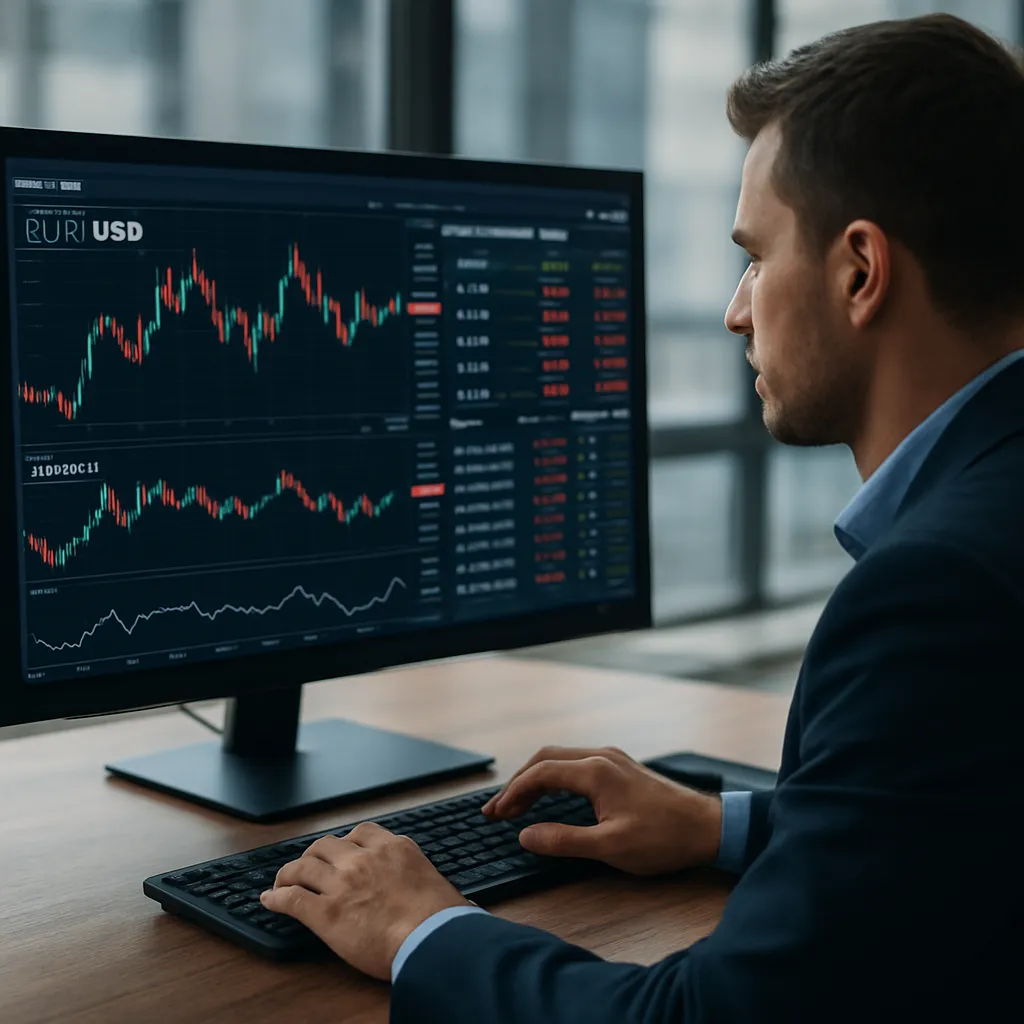
The fast-paced world of foreign exchange demands a deep understanding of how instantaneous information shapes market dynamics. This article delves into the pivotal role of real-time data in currency trading, exploring the technological frameworks that power data delivery and the strategies traders employ to capitalize on up-to-the-second insights. By examining the interplay between market participants, data providers, and digital platforms, readers will gain a clear perspective on why timely information is non-negotiable in modern Forex investing.
Real-Time Data and Its Role in Forex Markets
Market Transparency and Price Discovery
Access to real-time quotes and order book details empowers traders to gauge the true liquidity at any given moment. With constantly shifting bid-ask spreads, the ability to monitor price movements as they happen fosters efficient price discovery. In absence of immediate updates, market participants risk acting on stale data, which can lead to poor entry points and unexpected slippage.
Volatility Management
Currency pairs often exhibit sudden spikes in volatility due to macroeconomic releases or geopolitical events. Real-time feeds enable traders to spot abrupt changes in momentum and adjust their risk parameters instantly. By integrating live price alerts and automated stop-loss triggers, sophisticated systems help mitigate potential drawdowns during erratic market swings.
Impact on Trade Execution
In the world of high-frequency and algorithmic trading, every millisecond counts. Execution engines rely on continuous data streams to determine optimal entry and exit points. A delay of even a few milliseconds can result in orders filling at inferior prices, widening spreads and eroding profit margins. This underscores the competitive edge gained by institutions that invest heavily in low-latency connectivity.
Technological Infrastructure for Real-Time Data
Data Aggregation and Connectivity
Data providers collect quotes from multiple liquidity sources, including interbank networks and ECNs. These quotes are then aggregated, normalized, and distributed through APIs or proprietary channels. Key components include:
- Direct connections to global exchanges and data centers
- Redundant network paths to ensure uninterrupted delivery
- Data normalization layers to synchronize disparate feeds
Latency and Its Minimization
Latency represents the time lapse between a price change at the source and its arrival at a trader’s platform. Minimizing this delay is crucial for participants running high-frequency strategies. Techniques to reduce latency include:
- Co-location of servers within the same data center as major liquidity venues
- Use of ultra-fast messaging protocols (for example FIX or proprietary UDP-based systems)
- Hardware acceleration via FPGA or specialized network cards
Visualizing Data: Charting and Indicators
To make sense of raw ticks and quotes, traders rely on advanced charting platforms that render live candlestick patterns, tick volume histograms, and custom technical indicators. Real-time plotting allows:
- Immediate recognition of chart patterns (triangles, head and shoulders, flags)
- Dynamic back-testing against current conditions
- Live overlay of sentiment and order flow heatmaps
Strategies Leveraging Real-Time Data
Scalping and Micro-Trends
Scalpers aim to capture tiny price movements within seconds or minutes. They depend on tick-by-tick data to identify micro-trends and avoid adverse price spikes. Key elements include:
- Automated execution algorithms that place limit and market orders within milliseconds
- Order flow analysis to detect large institutional trades before they fully materialize
- Real-time monitoring of currency correlations to hedge instantaneous exposures
Event-Driven Arbitrage
Economic releases—such as central bank interest rate decisions or employment reports—often generate rapid price dislocations across related pairs. Traders equipped with real-time economic calendars and newswire feeds can:
- Pre-position orders in anticipation of scheduled events
- Exploit latency differentials between multiple venues
- Use sentiment analytics engines to gauge market reaction from social media and news sources
Risk Management and Position Monitoring
Continuous updates on trade performance allow risk managers to:
- Automatically enforce margin limits when currency exposures exceed thresholds
- Deploy trailing stops tied to real-time volatility metrics
- Rebalance portfolios instantly by shifting allocations among major and minor currency pairs
Future Trends in Real-Time Forex Data
Artificial Intelligence Integration
Machine learning models thrive on high-frequency data to detect subtle patterns and adapt to evolving market regimes. Next-generation trading systems will integrate real-time feeds with AI-driven predictive engines that:
- Continuously recalibrate parameters based on live performance
- Utilize deep learning for enhanced anomaly detection
- Provide real-time trade recommendations and risk-adjusted position sizing
Blockchain and Decentralized Market Data
Emerging protocols aim to distribute secure and tamper-proof market data via blockchain networks. By validating each tick through consensus mechanisms, decentralized oracles could:
- Ensure data integrity and provenance
- Reduce dependency on centralized aggregators
- Enable trustless integration with smart-contract-based trading platforms
Enhanced Mobile and API Ecosystems
As traders increasingly rely on smartphones and third-party applications, data providers are expanding mobile-friendly APIs that deliver ultra-low-latency quotes. Upcoming innovations include:
- Edge computing nodes to preprocess data closer to end-users
- 5G-enabled streaming services for uninterrupted feed during high-impact events
- Customizable push notifications tied to personalized algorithmic triggers