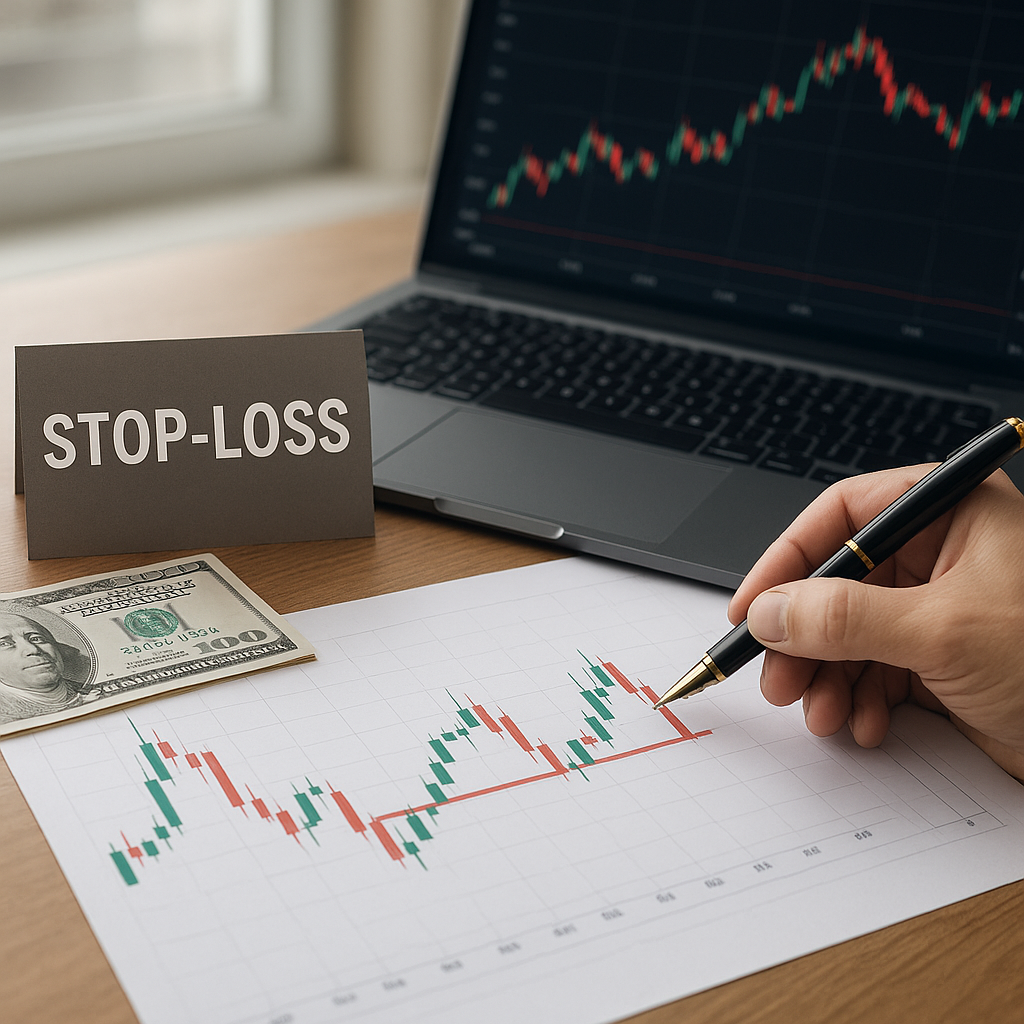
Investing in foreign exchange markets demands a balanced approach combining discipline, knowledge, and precise execution. One of the most potent tools at a trader’s disposal is the stop-loss order. When used correctly, it can act as a protective barrier against unexpected market swings, preserving capital and maintaining psychological balance. This article explores the fundamentals, strategies, and advanced methods to harness stop-loss orders effectively in your currencies investing journey.
Understanding Stop-Loss Orders in Forex Trading
Definition and Purpose
A stop-loss order is an instruction placed with your trading platform to close a position once the market reaches a predetermined price. Unlike a limit order that locks in profit, stop-loss helps you cap potential losses by exiting unprofitable trades automatically. This mechanism is essential for robust risk management, allowing traders to define their maximum tolerable loss before entering a position.
Market vs. Pending Stop-Loss
- Market Stop-Loss – Executed at the next available price once the stop level is breached. Offers fast execution but may suffer from slippage in highly volatile conditions.
- Pending Stop-Loss – Set at a specific price level, it transforms into a market order when triggered. Useful for automated exits but risks partial fills if liquidity dries up.
Advantages of Using Stop-Loss
- Emotion Control: Reduces impulse decisions by enforcing pre-defined exit points.
- Capital Preservation: Prevents single trades from wiping out large portions of your account.
- Strategy Consistency: Keeps your trading method disciplined and reproducible.
Key Strategies for Setting Effective Stop-Loss Levels
Technical Analysis Approach
Utilize technical analysis to identify logical stop-loss placements:
- Support and Resistance Levels – Position stops slightly beyond these zones to avoid common market noise.
- Moving Averages – Use popular averages (e.g., 50-period or 200-period) as dynamic barriers, setting stops just past them.
- Volatility Indicators – Tools like ATR (Average True Range) help gauge normal price swings. A multiple of ATR (e.g., 1.5× or 2×) can define a volatility-based stop distance.
Percentage and Fixed Pip Methods
If you prefer simplicity, consider these two approaches:
- Fixed Percentage – Dedicate no more than a small percentage (commonly 1–2%) of your account equity per trade. For a $10,000 account, a 1% risk equals $100 maximum loss.
- Pip Distance – Choose a fixed pip amount based on currency pair average moves. For instance, EUR/USD might warrant a 30–40 pip stop-loss in a standard day.
Position Sizing Integration
Stop-loss levels only matter when paired with proper position sizing. Calculate the lot size so that distance between entry and stop translates into your desired risk. This synergy between position sizing and stop distance ensures consistent money management across diverse trades.
Advanced Techniques to Enhance Your Risk Management
Trailing Stops for Dynamic Protection
A trailing stop moves along with favorable price action, locking in gains while allowing for continued upside. There are two main variants:
- Fixed Pip Trailing – The stop follows the price at a set pip distance.
- Adaptive Trailing – Based on indicators like ATR or parabolic SAR, it adjusts distance according to changing volatility.
Correlation and Hedging Considerations
Forex markets involve interconnected currency pairs. Understanding currency pairs correlations helps avoid overexposure. For example:
- Positive Correlation – EUR/USD and GBP/USD often move in tandem. Holding identical stop-loss levels on both pairs could amplify risk.
- Hedging Strategies – Place opposing trades on correlated instruments, each protected with a stop-loss tuned to the hedge ratio.
Stop-Loss in News and High-Impact Events
Major economic releases send shockwaves across forex markets, causing gapping and slippage. Mitigate this by:
- Wider Stops – Temporarily broaden stop distances to accommodate sharp moves.
- Order Cancellation – Close positions manually before known announcements to avoid execution uncertainty.
- Use of Options – Complement stop-loss orders with currency options for more precise risk caps.
Psychology and Discipline in Stop-Loss Implementation
Overcoming Emotional Bias
Many traders hesitate to set tight stops, fearing premature exits. However, letting losing trades run can devastate an account faster than missing small gains. Embedding stop-loss orders into your plan counteracts overconfidence and fear, fostering a consistent mindset.
Avoiding Common Pitfalls
- Stop Hunting – Brokers or large players may push prices near obvious stop levels, triggering weak hands. Offset this by placing stops beyond widely watched barriers or using mental stops combined with algorithmic execution.
- Moving Stops Too Soon – Locking in too quickly can rob you of significant profits. Decide in advance whether you’ll trail stops or leave them untouched until complete fill.
- Ignoring Account Growth – As equity rises or falls, recalibrate your stop-loss parameters to sustain fixed risk proportions.
Routine Review and Optimization
Continually backtest different stop-loss methods across various market conditions. Maintain a trading journal that logs entry, stop, and exit levels along with market context. This iterative process reveals which approaches resonate with your personal trading style and the unique traits of each currency pair.
Conclusion: Embedding Stop-Loss Orders into Your Trading Framework
Mastering stop-loss orders is not a one-time task; it evolves with your trading proficiency and market landscapes. Incorporate both foundational tactics and advanced adjustments—from ATR-based stops to correlated-asset hedges—to guard against unpredictable swings. By blending precise order types, smart liquidity considerations, and unwavering discipline, you forge a resilient trading approach capable of surviving even the most turbulent forex episodes.