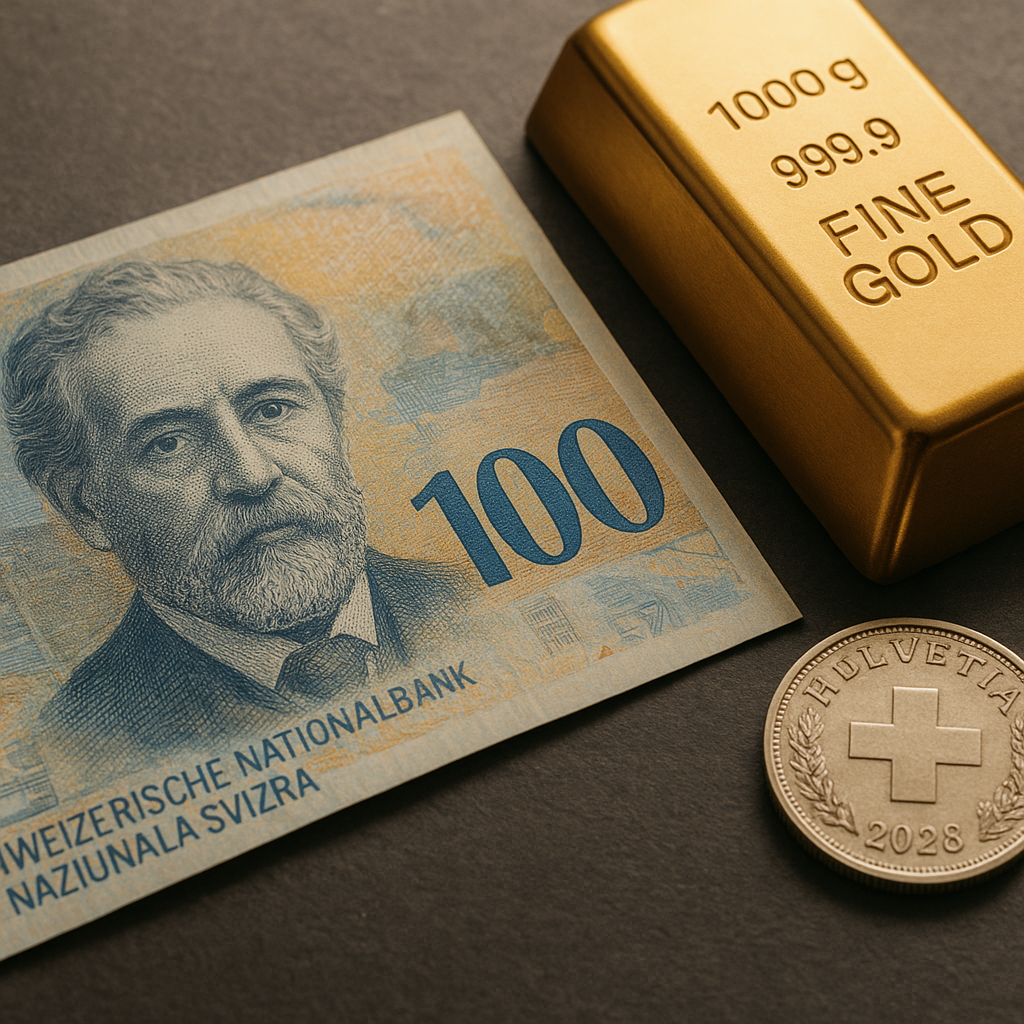
The Swiss Franc has long captured the attention of investors seeking refuge from market turbulence. Its reputation as a safe-haven currency has been forged over centuries of prudent economic management and a unique blend of financial policies. This article delves into the myriad factors that underpin the Swiss Franc’s allure and examines how currency investors can effectively incorporate it into their broader strategies.
Main Background and Historical Context
The history of the Swiss Franc stretches back to its official introduction in 1850, but its journey toward global prominence accelerated in the wake of the two World Wars. Switzerland’s commitment to neutrality and a robust banking industry provided a foundation of trust. As international conflicts and economic crises unfolded, the Franc emerged as an anchor in a world of shifting allegiances. Even during the Great Depression and the 2008 financial crisis, market participants flocked to Swiss assets, reinforcing perceptions of unparalleled stability.
The Swiss Franc’s Safe-Haven Appeal
Core drivers of demand
- Political Neutrality: Switzerland’s nonalignment in global conflicts bolsters confidence in the Franc’s purchasing power.
- Strong Financial Institutions: The nation’s banking sector, known for discretion and resilience, adds to the currency’s appeal.
- Robust Regulatory Framework: Strict banking laws and regulatory oversight limit systemic risks.
These features create a bedrock of trust. In moments of acute volatility, investors routinely pivot to the Franc, perceiving it as a safer alternative to more cyclical currencies.
Role of Monetary Policy
Switzerland’s monetary authority, the central bank, plays a pivotal role in steering the Franc’s value. Its willingness to intervene in foreign exchange markets, set negative interest rates, or purchase foreign assets helps maintain competitive export conditions while preserving the currency’s allure. These policy tools, while occasionally controversial, underscore the SNB’s commitment to a balanced approach that supports growth without compromising on market confidence.
Factors Influencing the Franc’s Strength
Beyond policy and politics, several market forces shape the Swiss Franc’s performance.
- Global Risk Sentiment: The Franc often moves inversely with global equities in risk-off periods.
- Trade Balances: Switzerland’s trade surplus contributes to persistent demand for the currency.
- Cross-Border Capital Flows: High-net-worth individuals and institutions park wealth in Swiss assets.
- Interest Rate Differentials: Even marginal rate differences with other developed economies can prompt significant capital flows.
At times, the Franc becomes overvalued relative to fundamentals, leading to speculation and central bank intervention. Conversely, prolonged weakening can create attractive entry points for contrarian investors.
Strategies for Currency Investors
Direct Franc Exposure
Investors can access the Swiss Franc through spot FX trades, forward contracts, or currency futures. Each instrument carries distinct risk profiles and margin requirements. Spot trading offers immediacy, while forwards and futures allow for cost-effective positioning over longer horizons.
Indirect Franc Plays
- Swiss Government Bonds: Typically low-yielding but high-quality, these bonds offer fixed-income exposure with minimal default risk.
- Equities of Multinational Swiss Corporations: Companies like Nestlé and Roche benefit from a strong domestic currency but derive substantial revenue abroad.
- Currency ETFs: Passive vehicles that track the Swiss Franc against a basket of currencies or a single counter-currency, such as the US dollar.
Hedging and Portfolio Allocation
Incorporating the Swiss Franc into a diversified currency portfolio can mitigate drawdowns during systemic shocks. Tactical hedging strategies—such as cross-currency swaps or options collars—enable investors to define risk and cost parameters. Whether the goal is pure hedging of international exposures or active speculation on rate differentials, the Franc’s predictable behavior during crises can act as a powerful stabilizer.
Risk Management and Future Outlook
While the Swiss Franc’s defensive qualities are well-documented, it is not immune to challenges:
- Policy Shifts: Unexpected monetary policy changes could disrupt market expectations.
- Global Coordination: International pressure to weaken the Franc may arise if export competitiveness deteriorates.
- Technological Disruption: Advances in digital currencies could alter cross-border capital flows and diminish traditional safe-haven demand.
Nonetheless, Switzerland’s track record suggests that adaptability and prudent governance will continue to support the Franc’s role. As investors confront a landscape marked by geopolitical tensions and shifting macroeconomic regimes, the currency’s core attributes—such as liquidity and stability—are likely to retain their appeal.
Navigating Opportunities
For investors weighing the inclusion of the Swiss Franc in their allocations, timing and instruments matter. Evaluating global risk indicators, monitoring SNB policy signals, and calibrating position sizes can optimize outcomes. More experienced market participants may deploy exotic options structures or volatility arbitrage to exploit fleeting mispricings, while conservative investors may favor straightforward bond or ETF exposures.
Conclusion
The enduring legacy of the Swiss Franc as a pillar of safe-haven investing rests on centuries of financial discipline and geopolitical neutrality. By understanding the nuanced interplay of monetary policy, market sentiment, and institutional frameworks, currency investors can harness the Franc’s unique characteristics to enhance risk-adjusted returns and strengthen overall resilience.