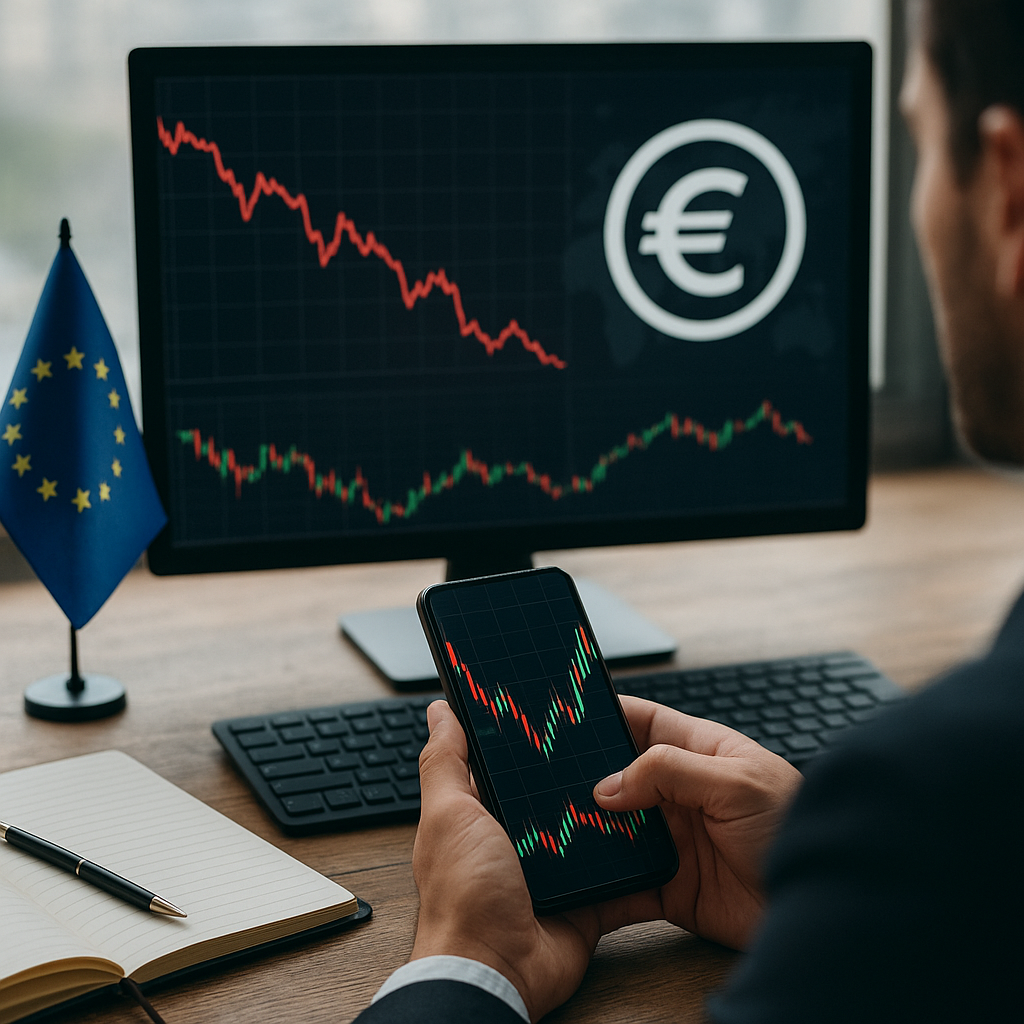
Staying informed about unfolding developments around the globe is vital for anyone engaged in the dynamic world of currency investing. Shifts in political leadership, sudden trade policy changes or unexpected central bank decisions can send exchange rates into rapid gyrations. By adopting a well-rounded strategy that includes news feeds, economic calendars, specialized data platforms and expert commentary, traders and portfolio managers can maintain an edge and limit exposure to undesirable surprises.
Real-Time News Feeds and Alerts
- High-Frequency Updates: Choose a news service offering millisecond-level updates on breaking headlines. This minimizes latency and ensures you see critical information before peers relying on slower sources.
- Customizable Alerts: Set alerts for keywords such as Central Bank, geopolitical risk, or specific currency pairs (e.g., EUR/USD). Automated notifications via email, mobile push or SMS keep you connected even when you’re away from your desk.
- Source Diversity: Combine mainstream financial outlets with specialized forex blogs and wire services to avoid blind spots and confirmation bias.
Top Platforms for News Aggregation
- Bloomberg Terminal – Widely respected for the depth of its market commentary and political coverage.
- Refinitiv Eikon – Offers real-time news transcripts alongside analytics tools for sentiment examination.
- Dow Jones Newswires – Known for concise headlines on macro developments and central bank statements.
Economic Calendars and Indicator Monitoring
An up-to-date economic calendar serves as the backbone of any robust currency strategy. It aggregates scheduled releases of macroeconomic data—from inflation figures to unemployment rates—which often drive sudden currency volatility.
- Prioritization Matrix: Assign importance levels to each data point. For example, nonfarm payrolls or GDP revisions might be a “red alert,” while minor survey updates rate a “yellow alert.”
- Impact Analysis: Review historical currency reactions to similar releases. This builds a reference framework for anticipating typical market responses.
- Time Zone Management: Align your watchlist with the opening and closing bell of major markets (Asia, Europe, North America) to avoid missing critical windows of liquidity.
Key Economic Indicators to Track
- Interest Rate Decisions – Central bank benchmarks determine yield differentials that underpin cross-currency valuations.
- Consumer Price Index (CPI) – Serves as a gauge for inflationary pressures and potential monetary policy shifts.
- Purchasing Managers’ Index (PMI) – Early signal for business confidence and manufacturing activity.
- Trade Balance Reports – Highlight export/import dynamics affecting currency flows in economies reliant on commodity or technology exports.
Social Media, Forums and Expert Commentaries
While official data and wire headlines dominate, the collective wisdom (and sometimes noise) on social networks can reveal evolving sentiment and rumor dynamics impacting algorithmic trading models.
- Twitter Lists – Curate lists of trusted economists, market analysts and central bank watchers. Follow real-time reactions as news breaks.
- Reddit & Telegram Channels – Some niche forums offer deep dives into currency correlations, carry trades and cross-asset flows.
- Podcasts & Webinars – Host live Q&A sessions with strategists to dissect policy statements and forecast currency trajectories.
Managing Information Overload
To prevent constant distraction:
- Filter by Relevance – Uncheck low-impact tags in your social aggregator or limit visibility to core updates only.
- Consolidate Summaries – Leverage daily or weekly newsletters summarizing the largest shifts in global events.
- Set Quiet Hours – Turn off non-essential notifications during less active market periods or when focus is critical.
Data Analytics Platforms and Predictive Tools
Advanced traders frequently equip themselves with specialized platforms that merge fundamental, technical and alternative datasets into a unified view. This integration supports more robust scenario analysis and risk management.
- Quantitative Models: Back-test strategies using historical economic shocks to gauge performance across various currency regimes.
- Sentiment Indices – Utilize proprietary indices measuring risk appetite or safe-haven flows (e.g., USD demand during crises).
- Machine Learning Alerts – Implement algorithms that detect unusual patterns or order book imbalances preceding sharp moves.
Examples of Analytical Suites
- QuantConnect – Offers cloud-based algorithmic backtesting integrating global news feeds alongside price data.
- TradingView Premium – Delivers custom indicators for volatility clustering, correlation breakdowns and momentum shifts.
- Quandl and Datastream – Provide vast repositories of historical macro data, currency crosses and sovereign bond yields for statistical analysis.
Practical Tips for Continuous Monitoring
- Establish a Dedicated Dashboard – Allocate a multi-screen workspace showing live quotes, news headlines and economic calendars in parallel.
- Collaborative Research – Join a small team or chat group for cross-checking interpretations and challenging assumptions.
- Routine Reviews – At the end of each market day, perform a brief debrief on what events moved the most critical currency
pairs and why. - Risk Controls – Predefine stop-loss triggers tied to major news events to avoid catastrophic drawdowns caused by flash crashes.
By combining these various channels—real-time wire services, economic calendars, social sentiment trackers and advanced analytics platforms—you create a multi-layered defense against unexpected turns in the foreign exchange arena. Such a structured approach enhances your ability to capitalize on emerging trends while mitigating downside from sudden market reversals.