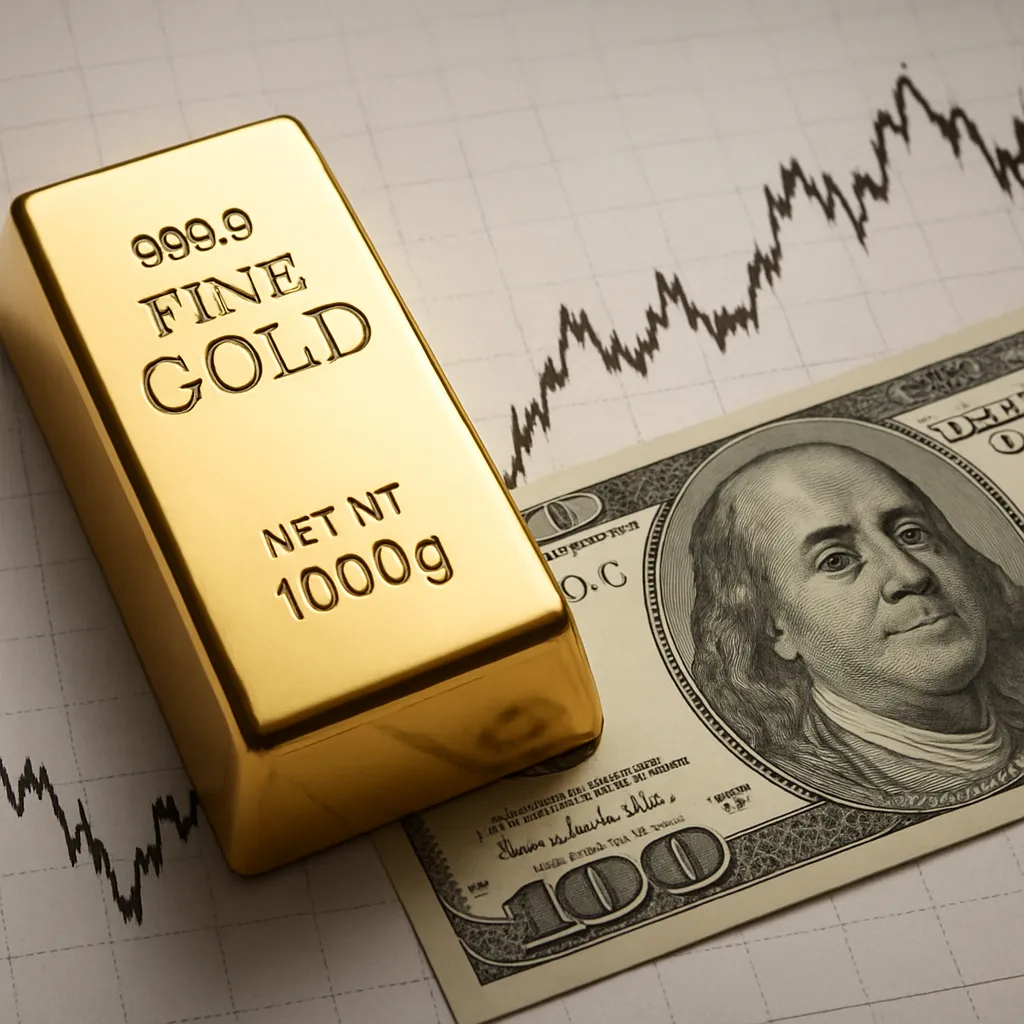
Examining the interplay between gold prices and the US Dollar offers profound insights for anyone involved in currencies investing. By tracing historical patterns, understanding market sentiment, and devising strategic approaches, investors can better navigate the shifting dynamics of global finance. This analysis explores how fluctuations in gold values influence the strength of the US Dollar, and outlines practical tactics to capitalize on emerging trends.
Understanding the Relationship Between Gold and the US Dollar
Historical Context
The link between gold prices and the US Dollar has evolved over centuries. Under the old gold standard, currencies were directly convertible into a fixed amount of precious metal, cementing the connection. Although that system was abandoned in 1971, the inverse correlation between gold and the US Dollar endures. When the US Dollar weakens, gold often rises as investors seek a reliable store of value, susceptible to less purchasing power erosion than fiat currency.
Mechanics of Inverse Correlation
At the heart of this relationship lies supply, demand, and perception. A stronger US Dollar makes gold more expensive in other currencies, reducing international demand and depresssing prices. Conversely, a depreciating US Dollar boosts gold demand overseas. Central banks, hedge funds, and retail buyers all respond to these shifts, adjusting portfolios and influencing broader currency movements. Over time, speculative flows can amplify the inverse correlation, creating feedback loops that traders exploit.
Impact of Gold Price Fluctuations on Currency Markets
Safe-Haven Dynamics
- When geopolitical tensions rise or economic data disappoints, gold is perceived as a safe-haven, often attracting capital away from risk-sensitive assets.
- A flight to safety can bolster gold prices while weakening the US Dollar, as investors divest from fiat holdings.
- Conversely, risk-on sentiment sees capital chasing higher-yielding currencies and equities, often pressuring gold downward.
Inflation and Real Yields
Inflation expectations and real interest rates exert significant influence on both gold prices and the US Dollar. When real yields (nominal yields minus inflation) decline, the opportunity cost of holding non-yielding gold falls, making it more attractive. This dynamic typically coincides with a softer US Dollar, particularly when the Federal Reserve signals dovish policy. Investors worried about inflation eroding purchasing power often pivot into gold, further pressuring the US Dollar.
Exchange Rates and Trade Balance
A weakening US Dollar can stimulate exports by making American goods cheaper abroad, potentially improving the trade balance. However, rising gold prices can signal inflationary pressure, compelling the Federal Reserve to tighten policy. Such interventions can strengthen the US Dollar temporarily but may also dampen economic growth. In contrast, a strong US Dollar can attract foreign capital, boost imports, and restrain gold demand. Trade flows, currency reserves, and retail investor sentiment intertwine in this complex arena.
Trading Strategies for Currencies Based on Gold Price Movements
Hedging Approaches
Hedging currency exposure with gold can protect portfolios during periods of heightened volatility. Investors concerned about a declining US Dollar might allocate part of their assets to gold-backed instruments, such as ETFs or futures contracts, to offset losses in dollar-denominated positions. This strategy leverages gold’s historic role as a store of value, particularly when real yields turn negative.
- Gold Futures: Contracts that lock in current gold prices, enabling precise hedges against dollar weakness.
- Gold ETFs: Provide diversified exposure without physical delivery concerns, suitable for shorter-term tactical positions.
- Options Strategies: Purchasing calls on gold while holding long currency positions can limit downside risk while preserving upside potential.
Relative Value Trades
Traders can exploit divergences between gold and currency trends by establishing pairs trades. For instance, if gold prices spike amid falling real yields while the US Dollar lags, one could go long gold futures and short dollar index futures. This captures the spread widening, profiting from the amplified inverse correlation. Risk management is crucial: stop-loss orders and dynamic position sizing help mitigate abrupt reversals.
Macro Overlay Strategies
Institutional investors often integrate macroeconomic forecasts to time their gold and currency exposures. By analyzing central bank communications, labor market data, and fiscal policies, they anticipate shifts in real interest rates and inflation. A forecast of Fed rate cuts, for example, may trigger an overweight in gold and short positions in the US Dollar. Such decisions can be reinforced by quantitative models that monitor technical indicators, momentum metrics, and volatility regimes across multiple markets.
Key Considerations:
- Be mindful of transaction costs and carry financing charges when trading futures or leveraged instruments.
- Monitor geopolitical events and policy statements, as sudden shifts can spark rapid re-pricing.
- Maintain adequate liquidity buffers to meet margin calls during periods of elevated volatility.
- Regularly rebalance portfolios to align with evolving economic conditions and risk tolerance.
Conclusion
Understanding the nuanced interplay between gold prices and the US Dollar equips currency investors with a powerful framework for decision-making. By leveraging historical insights, exploiting inverse correlations, and employing rigorous hedging and overlay strategies, market participants can enhance portfolio resilience and pursue attractive returns even in uncertain times.