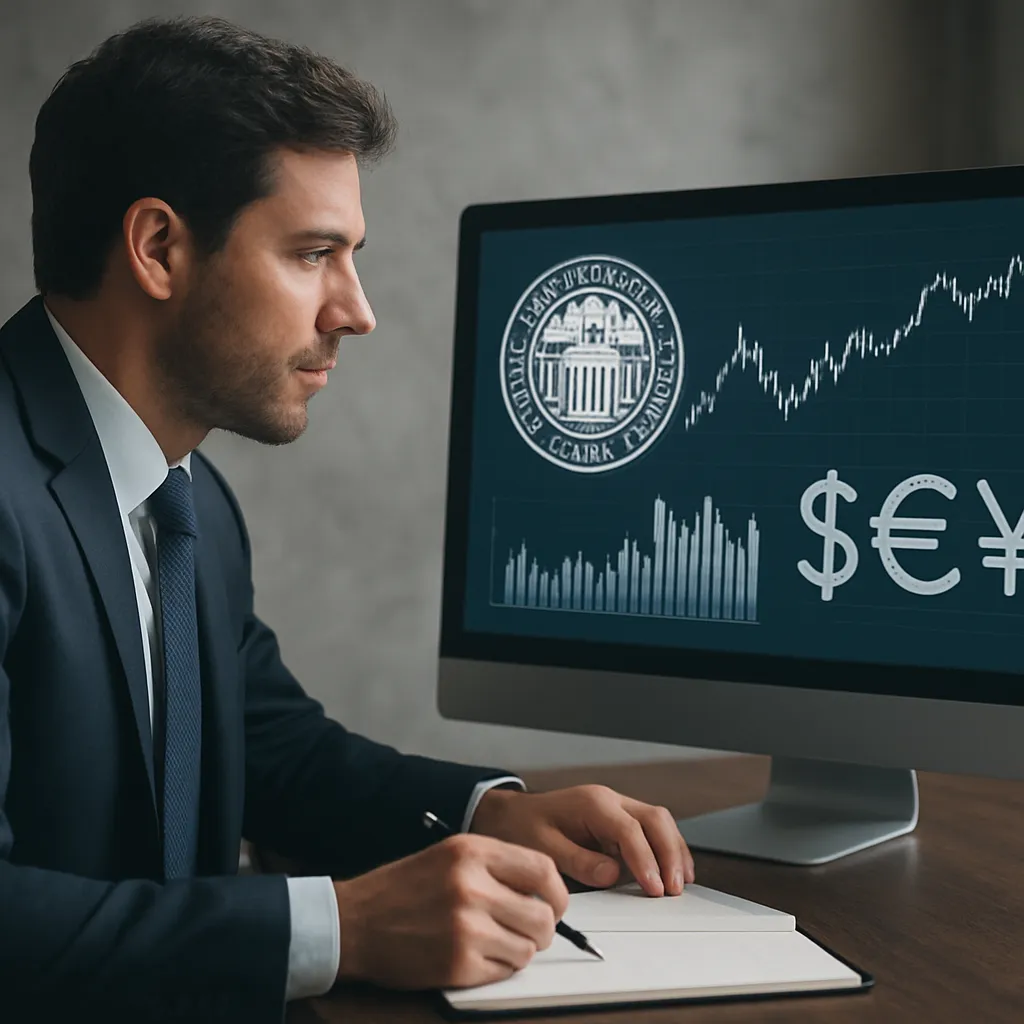
The foreign exchange market, often referred to as Forex, is the largest financial market in the world. It allows investors to trade one currency for another, enabling international trade, travel, and global investment. For those looking to expand their portfolio beyond traditional stocks and bonds, currency trading offers a unique set of opportunities and challenges. In this article, we will explore how currency pairs work, the factors that influence their values, and essential strategies every investor should consider when venturing into the world of Forex.
Understanding the Fundamentals of Currency Pairs
At the core of Forex trading is the concept of a currency pair. When you buy one currency, you simultaneously sell another. This dual-component quote comprises:
- Base currency: The first currency in the pair (e.g., EUR in EUR/USD).
- Quote currency: The second currency (e.g., USD in EUR/USD).
Prices are generally quoted to four or five decimal places, representing the smallest price move known as a pip. For example, if EUR/USD moves from 1.1050 to 1.1051, that one-digit shift is one pip. Understanding bid and ask prices is critical:
Bid and Ask Prices
- Bid: The price at which a broker is willing to buy the base currency (you sell).
- Ask: The price at which a broker will sell the base currency (you buy).
The difference between bid and ask is called the spread, a key cost factor in trading. A narrow spread often indicates high liquidity, while a wider gap suggests less active markets.
Major, Minor, and Exotic Pairs
Currency pairs are categorized based on trading volume and market prominence:
- Major pairs: Include the most traded currencies against the US dollar, such as EUR/USD, USD/JPY, and GBP/USD. They typically offer tighter spreads and lower volatility.
- Minor pairs: Cross-currency pairs that exclude the US dollar, for example, EUR/GBP or AUD/JPY. These pairs can present slightly higher volatility and larger spreads.
- Exotic pairs: Involve one major currency and one from a smaller or emerging economy, like USD/TRY or EUR/ZAR. These carry significant risks due to political and economic instability.
Choosing the right category depends on your risk tolerance and market expertise. While majors offer stability, exotics can deliver large gains at the cost of greater unpredictability.
Key Drivers of Exchange Rate Movements
Several interrelated factors influence currency values on a minute-by-minute basis. Investors must monitor:
- Central bank policies: Interest rate decisions and monetary stimulus measures by institutions like the Federal Reserve or European Central Bank can shift flows rapidly.
- Economic indicators: Data on GDP growth, unemployment rates, inflation, and retail sales provide insights into an economy’s health.
- Geopolitical events: Elections, trade disputes, and conflicts often trigger sharp moves due to uncertainty.
- Risk sentiment: In times of market stress, investors flock to safe-haven currencies such as USD, CHF, and JPY.
Successful Forex investors cultivate a keen eye for scheduled announcements and use an economic calendar to anticipate potential spikes in activity. By combining fundamental analysis with real-time news feeds, traders can stay a step ahead of sudden market swings.
Investment Strategies in Forex Markets
Numerous approaches exist for navigating the dynamic landscape of currency trading:
- Carry trade: Borrowing in a low-yield currency to invest in one offering higher interest. Profit derives from the interest rate differential but is vulnerable to sudden shifts in volatility.
- Trend following: Identifying and riding established price directions via moving averages or breakout systems. This method demands discipline to avoid false signals.
- Range trading: Buying near support levels and selling near resistance within a defined price band. It works best in markets with limited trending behavior.
- Hedging: Using options or forward contracts to protect against adverse currency moves, particularly important for multinational corporations and import-export businesses.
- Scalping: Executing high-frequency trades to capture small profits from fleeting price imbalances. Scalpers must pay close attention to spreads and execution speed.
Each strategy requires tailored risk controls. Traders often combine methods, applying fundamental triggers for entry and technical indicators for precise timing.
Managing Risk and Leverage
One of the most alluring yet dangerous features of Forex trading is leverage. Brokers may offer ratios as high as 100:1 or more, allowing a small margin deposit to control a large position. While this amplifies gains, it equally magnifies losses.
Effective risk management principles include:
- Setting strict stop-loss orders to cap potential downside.
- Allocating a limited percentage of capital per trade (commonly 1–2%).
- Maintaining adequate margin levels to avoid margin calls.
- Pursuing portfolio diversification by holding positions across multiple currency pairs and asset classes.
- Regularly reviewing and adjusting exposure based on evolving market conditions.
By balancing ambition with caution, investors can navigate extreme price movements without jeopardizing their entire trading account.
Technical and Fundamental Analysis Tools
Blending both analytical disciplines can enhance decision-making:
- Fundamental tools: Economic calendars, central bank minutes, and yield curve analysis inform traders about long-term drivers of currency strength or weakness.
- Technical tools: Chart patterns, oscillators like RSI and MACD, and candlestick formations help pinpoint optimal entry and exit levels.
- Sentiment indicators: The Commitment of Traders report and retail positioning data reveal whether market consensus aligns with price trends or hints at imminent reversals.
A balanced approach ensures that traders recognize not only where a trend may lead but also why it exists. This holistic perspective underpins sustainable success in the fast-paced Forex arena.