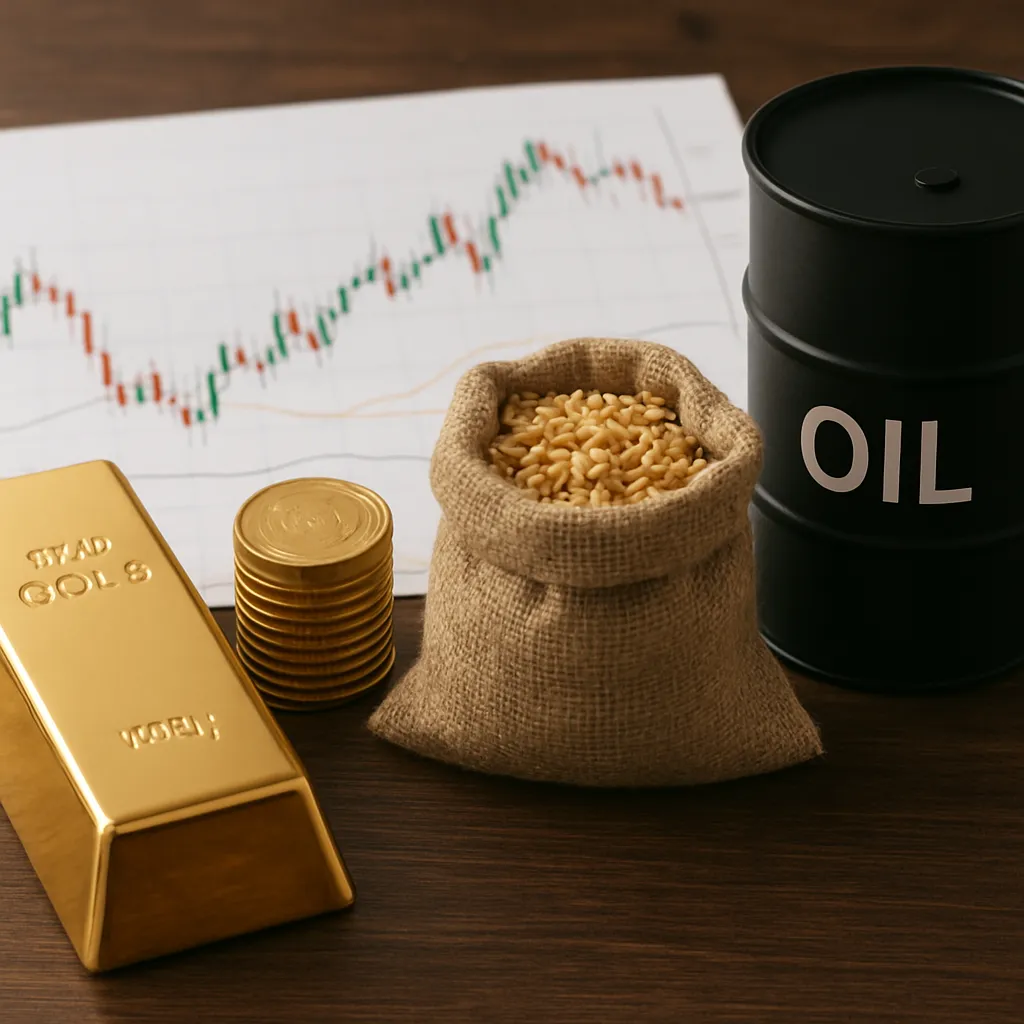
The interplay between commodity prices and currency movements is a cornerstone of modern financial analysis. Traders, investors, and policy makers monitor shifts in raw material costs to gauge broader economic trends and adjust their exposure accordingly. Understanding this relationship requires a multifaceted approach that considers supply‐and‐demand dynamics, global trade patterns, and the influence of monetary policy on national liquidity conditions.
Mutual Dynamics of Commodities and FX Markets
The connection between raw materials and exchange rates can be traced to the basic principle that a country’s trade balance often hinges on its export and import values. As demand for a certain resource rises, so does the value of the currency in which that resource is priced and traded. Consider the following factors:
- Supply shocks: Unexpected disruptions in production, such as geopolitical tensions in oil‐producing regions, can trigger rapid price spikes, driving up revenues for exporting economies and strengthening their currencies.
- Demand shifts: Industrial expansions, especially in emerging markets, can boost metal or energy consumption, creating upward pressure on prices and positive currency carry effects.
- Monetary policy response: Central banks may adjust interest rates to counter inflationary pressures caused by rising commodity costs, altering the attractiveness of domestic assets and influencing capital flows.
Key Commodities Influencing Major Currencies
Several macroeconomic variables are tightly linked to specific raw materials. Below are some prominent examples:
Oil and Petrodollars
- Crude oil serves as the lifeblood of industries and transportation, rendering the US dollar’s role in pricing oil crucial to global trade.
- Oil‐exporting nations often accumulate foreign reserves in dollars, reinforcing USD demand and contributing to the dollar’s reserve currency status.
Precious Metals and Safe-Haven Currencies
- Gold and silver appeal during periods of financial distress, driving capital flows into currencies like the Swiss franc and Japanese yen, which are perceived as stable havens.
- Inflationary concerns tied to rising gold prices can prompt central banks to adjust interest rates, affecting yield differentials and cross‐border capital flows.
Base Metals and Industrial Economies
- Nickel, copper, and aluminum are barometers of global manufacturing health. Rising metal prices often coincide with robust growth in Asia, boosting currencies such as the Australian and New Zealand dollars.
- The economic fortunes of commodity‐intensive exporters are closely tracked through metal price indices, offering investors a barometer for currency rotation strategies.
Analytical Frameworks for Assessing Impact
Traders employ a variety of models and tools to quantify how commodity price fluctuations translate into currency performance:
- Correlation Analysis: Statistical measures of co‐movement between price indices and FX rates over different time horizons.
- Vector Autoregression (VAR): A system of equations modeling interdependencies among multiple macro variables, including commodity prices, interest rates, and exchange rates.
- Event Studies: Examining currency reactions to discrete commodity price shocks, such as OPEC announcements or mining labor strikes.
These approaches provide insights into cumulative effects, lead‐lag relationships, and feedback loops. For instance, a prolonged period of rising copper prices might precede currency appreciation in a metals‐exporting country, prompting central bankers to tighten policy, which in turn further alters capital flows.
Practical Implications for Traders and Portfolio Managers
Market participants looking to integrate commodity‐currency linkages into their strategies should consider several volatility and risk management techniques:
- Hedging with Futures and Options: Locking in price or exchange rate levels to protect profit margins or contain downside risk, especially when a portfolio holds significant commodity shares or currency exposures.
- Currencies as Diversifiers: Pairing commodity‐linked currencies with equities or bonds to achieve diversification, since commodity‐driven FX moves often exhibit low correlation with traditional asset classes.
- Carry Trades and Yield Differentials: Exploiting interest rate gaps between commodity‐heavy economies and others, adjusting for the probability of price reversals and sudden risk‐off episodes.
Additionally, staying abreast of inflation metrics, global fiscal policy shifts, and shipping or logistics developments can offer advance signals of commodity price shifts. This preemptive approach gives traders the opportunity to position their currency portfolios ahead of broad market moves.
Challenges and Future Directions
While the link between raw material costs and currency valuations is well documented, emerging factors complicate the picture:
- Renewable Energy Transition: As economies shift toward greener sources, the influence of fossil fuels on currency dynamics may wane, altering historic relationships.
- Decentralized Trading Platforms: Blockchain‐based commodity exchanges could change settlement mechanisms, impacting currency demand and settlement cycles.
- Geo‐political Fragmentation: New trade blocs and regional partnerships may create non‐linear price responses, challenging standard correlation‐driven models.
Effective analysis will increasingly rely on big data, real‐time satellite monitoring of shipping activity, and machine learning algorithms that can detect nascent trends in commodity supply chains and currency flows. By combining traditional economic theory with cutting‐edge technology, market professionals can refine their strategies and maintain a competitive edge in the ever‐evolving landscape of global finance.