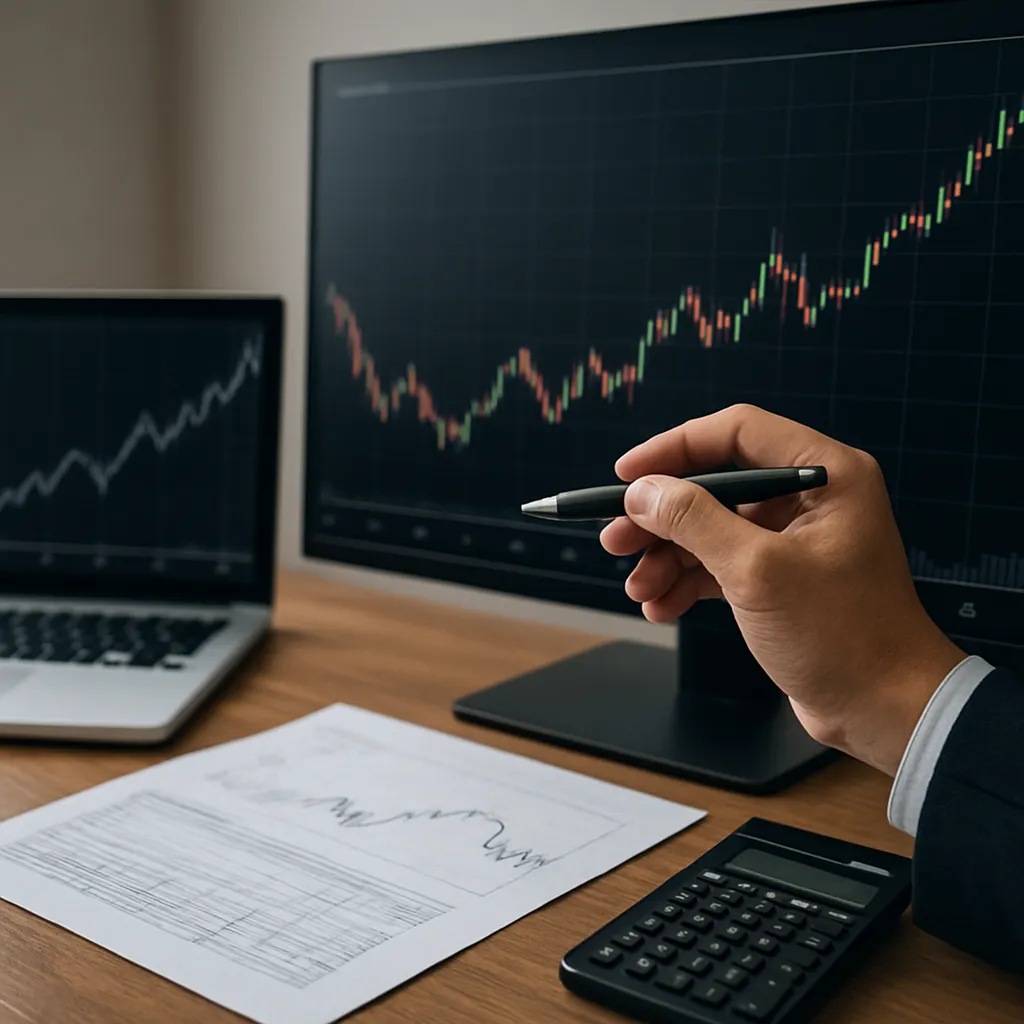
Backtesting stands at the heart of any serious currency trading endeavor. By simulating a strategy against historical data, traders gain crucial insights into its feasibility, uncover hidden weaknesses, and build confidence before committing real capital. A disciplined backtesting process combines meticulous data analysis, realistic assumptions, and rigorous evaluation metrics to guide decision-making. Whether you aspire to deploy simple moving average crossovers or complex algorithmic models, understanding the nuances of backtesting can be the difference between success and costly trial-and-error in the volatile forex arena.
Understanding Backtesting and Its Role in Forex Markets
What Is Backtesting?
Backtesting is the practice of applying a trading strategy to past market conditions to assess how it would have performed. It relies on robust historical data—tick-by-tick quotes or minute bars—to simulate order entries, exits, slippage, and transaction costs. A credible backtest recreates market microstructure, capturing volatility spikes, gap risks, and spreads. By reconstructing past scenarios, traders can isolate the factors driving profitability, determine key parameter sensitivities, and estimate potential drawdowns before risking real funds.
Why Backtesting Matters for Currency Traders
The forex market operates 24 hours a day across multiple time zones, offering high liquidity but also exposing participants to rapid price shifts. Backtesting helps traders navigate these dynamics by:
- Validating whether a strategy thrives under varied economic calendars.
- Measuring performance consistency across volatile and calm periods.
- Quantifying risk management parameters, such as position sizing and stop-loss placements.
Instead of relying on anecdotes or recency bias, a systematic backtest grounds expectations in objective results.
Designing a Robust Backtesting Framework
Data Collection and Quality
The foundation of reliable backtesting is impeccable data quality. Traders should source:
- Tick-level or sub-minute data to capture intraday movements.
- Adjusted historical spreads to account for changing liquidity.
- Corporate event calendars to avoid artificial gaps.
Poor data integrity can lead to misleading profitability or hidden risks. Rigorous cleaning, normalization, and alignment of time stamps are essential to preserve the backtest’s credibility.
Strategy Implementation and Simulation
Once data is prepared, the strategy logic must be coded with precision. Whether developing in Python, R, or specialized platforms, ensure the simulation mirrors live conditions by including:
- Order execution delays and slippage models.
- Realistic commission structures and rollover costs.
- Dynamic trade sizing linked to account equity.
A simulated environment that neglects these factors will overstate returns and underplay potential risks.
Performance Metrics and Evaluation
Assessing strategy outcomes requires a multifaceted approach. Key metrics include:
- Sharpe Ratio or Sortino Ratio to gauge risk-adjusted returns.
- Maximum Drawdown to identify peak-to-valley losses.
- Winning Rate and Profit Factor for trade quality insights.
- Expectancy per trade to set realistic return targets.
By combining absolute and relative measures, traders develop a balanced view of both upside potential and vulnerability to adverse swings.
Common Pitfalls and Best Practices
Overfitting and Curve Fitting
One of the gravest dangers in backtesting is overfitting. Excessive parameter tweaking can produce stellar in-sample results but fail catastrophically in live markets. To prevent this:
- Reserve out-of-sample data for validation.
- Limit the number of adjustable parameters.
- Employ cross-validation techniques across several time windows.
These practices promote strategy robustness and guard against merely capitalizing on data quirks.
Survivorship Bias and Data Snooping
Ignoring delisted currency pairs or filtering out poor-performing instruments leads to survivorship bias, overstating gains. Similarly, data snooping—repeatedly testing until a desired outcome emerges—distorts statistical validity. Ethical backtesting demands:
- Inclusion of all relevant instruments, past and present.
- Randomized sub-sampling to ensure findings aren’t spurious.
Only then can performance claims stand up to academic scrutiny and real-world deployment challenges.
Walk-Forward Analysis and Stress Testing
To further validate resilience, incorporate walk-forward analysis, where strategy parameters adjust periodically based on recent data, then test forward. Complement this by stress testing under extreme scenarios—flash crashes, currency pegs breaking, or central bank surprises. A strategy that weathers historical shocks is more likely to endure future turbulence.
Optimizing Strategies through Iterative Backtesting
Parameter Tuning and Optimization Techniques
After establishing a baseline, traders can refine parameters using:
- Grid Search for systematic exploration of discrete values.
- Genetic Algorithms to evolve optimal settings over generations.
- Machine Learning methods, such as Bayesian Optimization, for efficient convergence.
However, any improvement in backtest performance must be cross-checked on fresh data to confirm genuine enhancement rather than data mining.
Incorporating Transaction Costs and Liquidity Constraints
No backtest is complete without realistic cost assumptions. Include:
- Variable spreads that widen during economic events.
- Slippage estimates derived from average trade size.
- Liquidity filters to avoid signals when order books thin out.
Embedding these costs ensures the simulated returns reflect true market conditions and prevents unpleasant surprises when deploying live.